
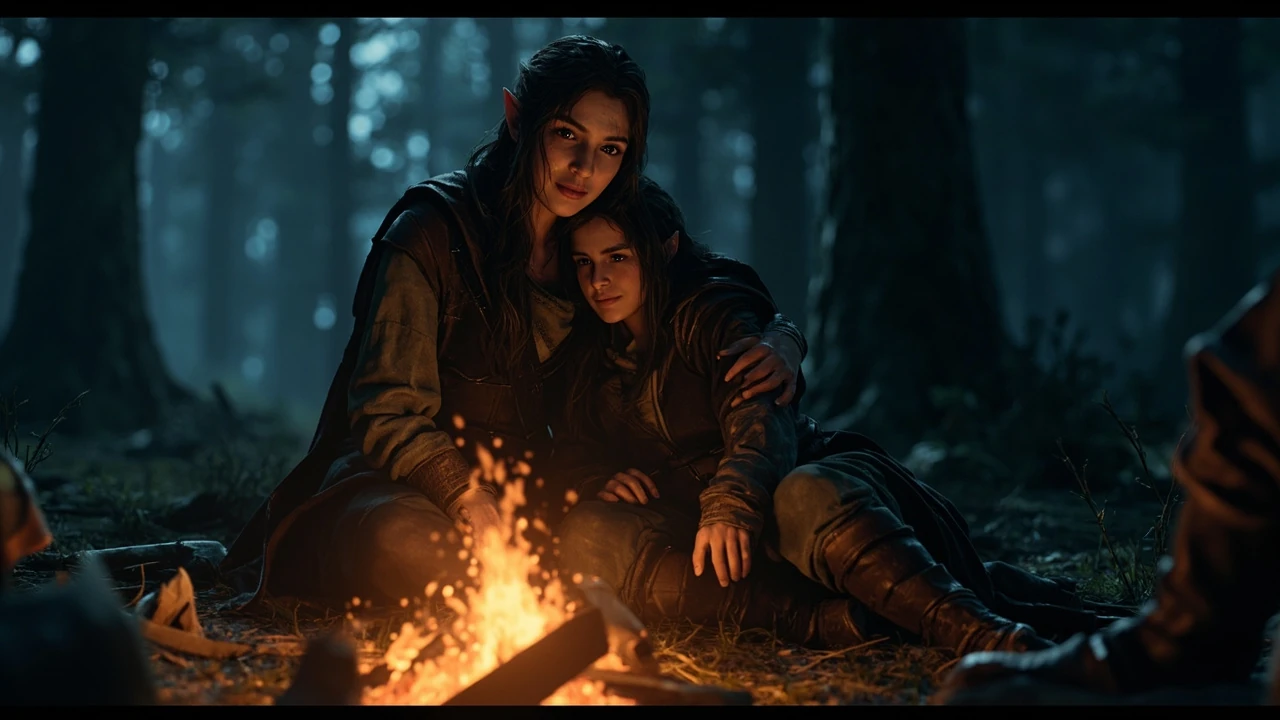
Shadowheart romance in Baldur’s Gate 3: how the arc is actually built
The shadowheart romance in Baldur’s Gate 3 looks like a personal story on the surface, but it is a layered quest system under the hood. Approval values, scripted flags, camp scenes, and a small set of high-stakes dialogue branches all have to land in a specific order for the relationship to resolve. Treating the arc as a designer rather than a fan changes how you read it: every gift, rest, and conversation choice is a conditional node, and several of them quietly lock or unlock later content. This walkthrough unpacks the mechanics, the scenes that matter most, and the failure points most players hit, so you can plan a run that stays consistent with the character you want to play.
What kind of content the shadowheart romance actually is
From a production standpoint, the shadowheart romance is a companion-driven narrative arc that runs in parallel with Act 1, Act 2, and Act 3. It is not a side quest with a single quest giver; it is a relationship state machine attached to a companion who travels in the party. The arc has a beginning, two mid-game inflection points, and a finale, and it shares several scripts and cutscenes with the main story. Because the arc was designed for replay, the team built multiple branch states rather than a single linear path. The same companion can end the campaign in very different places depending on the player’s choices, and each outcome is gated by both approval thresholds and story-specific flags.
The arc also serves a design purpose beyond character development. It tests the player’s moral priorities, because Shadowheart’s personal quest pulls the party into choices that affect an entire region. The romance is therefore not separate from the campaign; it is a lens that forces the player to think about faith, identity, and consequences. Designers often frame companion arcs this way because they want the relationship to feel earned rather than rewarded purely for completion.
The approval system that drives the shadowheart romance
Every recruitable companion in Baldur’s Gate 3 reacts to your decisions through a hidden approval value. Shadowheart is no exception. Her approval is influenced by:
- dialogue tone, especially when you back her up against other party members;
- tactical behavior in combat, where protecting her or taking risks she respects both move the meter;
- gifting, though the developers limited gift stacking so that spamming items does not trivialize the arc;
- decisions that touch her personal themes: faith, family, and the tension between obedience and conscience.
From a designer’s view, approval is the soft gate. It will not hard-fail the arc by itself, but it controls which dialogue options appear and how characters respond to you in camp. Two players with identical flags but different approval totals will see different flavor lines and sometimes different mid-game branches. That is why a player who likes the companion can still feel that the arc is going cold; they may have the right story choices but the wrong relationship signal.
Story gates: the few scenes that actually lock the arc
Approval opens doors, but the shadowheart romance is finally decided by a small number of high-stakes scripted scenes. These are the moments where the quest designer hands the player a binary decision and the engine records a permanent flag. The most important of them happen in three clusters:
- The personal quest chain in the lower city and the graveyard, where the player commits to a path about a hidden artifact.
- A pivotal camp night that depends on previous approval, quest progression, and whether another romance is active.
- A late-act decision that ties her personal quest to the larger story and determines the final companion state.
Each of these scenes is built as a branching dialogue tree with several scripted outcomes, and the engine records the result so that subsequent scenes know which state to read. Because the flags are persistent, a wrong choice at one of these moments will quietly route the rest of the arc even if approval is high. That is the single most common reason players feel the relationship “fizzled” despite doing everything else right.
How Act 1 sets up the shadowheart romance
Act 1 is the recruitment and trust phase. Shadowheart can be recruited very early, and the first few long rests are where the player starts receiving camp conversations. The designers used the early game to establish three things: the artifact at the center of her quest, a low-trust baseline, and a clear set of values that the player can read from her reactions. The most useful early-game actions for the arc are:
- recruiting her before exploring major Act 1 dungeons, so that story content is calibrated to her presence;
- taking long rests when the party has unresolved personal business, because several scripted scenes are tied to rest events rather than to specific quest triggers;
- avoiding choices that directly contradict her faith early on, even if the player intends to challenge that faith later; the system trusts the player more if you earn friction before you push back.
Players who try to skip camp conversations or chain-quest without resting often miss the early flag that makes the mid-game branch work. The arc is forgiving, but not infinitely so, and Act 1 is where the forgiveness budget is largest.
Act 2: where approval and story collide
Act 2 introduces the largest single cluster of content for the shadowheart romance, because the party’s journey brings her personal quest into the open. Designers tend to put the most important relationship beats here because the narrative stakes are already high and the player is committed to the campaign. From a system design view, Act 2 is where approval is read most aggressively: it determines which confidences are shared, which confidences are withheld, and which cutscenes play in full versus in shortened form.
Two practical rules of thumb help here. First, a single Act 2 choice can outweigh a full Act 1 of approval gains, so do not assume the meter is a slow accumulator. Second, the companion’s reaction to your Act 2 decisions is heavily conditional on a specific earlier flag, so if the player is unsure which branch they triggered, they should look at the camp dialogue from the previous rest, not at the current quest state. The system is consistent, but it is also quiet, and that quiet is by design.
Act 3: finale, alternatives, and the companion epilogue
By the time the party reaches Act 3, the relationship state is mostly fixed. The remaining content is the resolution of the personal quest, the final conversation, and the companion’s epilogue portrait. Designers use this structure to keep the late game from doing too much heavy lifting; by Act 3, the arc is being read, not written. The player’s job is to honor the state they built and to make a small number of scene-specific choices that decide the companion’s fate.
Players who reach Act 3 with conflicting flags, for example a high-approval profile but a story choice that contradicts her personal quest, will see an arc that resolves but with a colder tone. That is not a bug. It is the system telling the player that the relationship and the story were not aligned, and it is one of the more interesting design choices in the campaign.
Common failure modes in the shadowheart romance
From a quality assurance perspective, the shadowheart romance is one of the most tested arcs in the game, but it is also one of the most reported in support data. The recurring failure modes are consistent enough to document:
| Failure mode | Likely cause | What the player sees | How to diagnose |
|---|---|---|---|
| Camp scenes stop appearing | Too few long rests, or another high-priority companion quest is monopolizing rest events | Long gaps between conversations, no personal quest trigger | Check rest history and active companion quests before assuming the arc is broken |
| Mid-game branch is locked out | An early Act 1 or Act 2 choice set a flag that disables this branch | Specific dialogue option never appears, even with high approval | Reload an earlier save and review the trigger that controls that branch |
| Companion reacts inconsistently | Mixed signals: high approval, opposite story choice, or conflicting party behavior | Warm camp talk but cold quest reactions | Compare approval trend with the most recent personal quest decision |
| Final scene is muted | Story branch and approval branch disagree | Finale plays but with reduced content and a reserved tone | Review the flag set in the latest personal quest, not just the approval meter |
These failure modes are not unique to this arc, but they appear here more often because the arc touches sensitive content that the writers deliberately did not optimize for maximum play rate. They wanted the relationship to feel like a result, not a reward.
How the shadowheart romance compares to other companion arcs
Companion arcs in Baldur’s Gate 3 share a common skeleton: recruitment, trust, personal quest, finale. What differs is how much each arc leans on approval versus story gates, and how forgiving the system is when the two disagree. A useful comparison:
| Dimension | Shadowheart | Approval-heavy companion | Story-heavy companion |
|---|---|---|---|
| Primary gate | Mix of approval and personal quest flags | Approval threshold at mid-game | Personal quest branch with low approval sensitivity |
| Forgiveness for conflicting signals | Moderate; final tone adjusts to the dominant signal | Low; approval is decisive | High; the quest is the priority |
| Sensitivity to long-rest pacing | High; several beats are rest-triggered | Medium; approval accumulates from many sources | Low; most beats are quest-triggered |
| Replay value of the arc | High; faith and identity themes read differently on a second run | Medium; the arc feels similar once approval is high | High; the moral choice has a long tail |
That mix is intentional. The design team wanted a companion whose relationship with the player could not be reduced to a single number, because the themes of the arc do not reduce cleanly to one either. If a player is trying to learn the system’s grammar, the shadowheart romance is one of the better places to start, because it punishes careless play but rewards intentional inconsistency less than the more approval-driven arcs do.
Reading the arc as a quest designer
The shadowheart romance is a useful case study if you are interested in how narrative systems are built. Three patterns stand out. First, the relationship is encoded in a small set of persistent flags, not in a single global value, which is why approval and story state can disagree. Second, the arc shares triggers with the main campaign, so the designers had to negotiate who gets the rest event and who gets the quest trigger when several arcs want the same beat. Third, the late game deliberately reduces the arc’s agency, so the player’s earlier work is what determines the resolution.
For a developer or designer, the practical takeaway is that the arc is a good example of how to keep a long companion story readable for the player while still being deep enough to reward multiple runs. The designers did not try to make every variable visible. They surfaced a few, made the rest legible through NPC behavior, and trusted the player to learn the system by observation. That is a hard balance to hit, and the arc is one of the more successful attempts in the game.
What to do if your shadowheart romance run goes off track
Players who feel that the arc has gone wrong usually have more options than they think. A focused recovery pass is often enough:
- Audit your long-rest history. If you have been chaining quests without resting, the system may simply not have had room to play the camp scene that opens the next beat.
- Compare your last two personal quest decisions with the most recent camp conversation. The companion’s tone in camp is the cleanest read on which branch you triggered.
- Check whether another companion is in a competing romance state. Some arcs quietly downgrade a second relationship during mid-game, and that can read as a cold companion rather than as a system message.
- If you are near a major Act boundary and the arc still feels off, a clean reload to the previous Act is usually less painful than pushing through with the wrong flags.
None of these are guaranteed fixes. They are the same checks a QA tester would run, and they are the most efficient way to recover a run that has gone cold for the wrong reasons.
A short checklist for a consistent shadowheart romance run
For players who want a single, scannable reference, the following list captures the design-level decisions that the arc rewards most consistently.
- Recruit the companion early enough to let the camp scenes anchor the early game.
- Rest often in Act 1, especially after recruitment and after the first personal quest trigger.
- Treat the first high-stakes personal quest choice as the branching moment, not as a flavor option.
- Keep approval and story signals roughly aligned; a small mismatch is fine, a large one is not.
- Avoid locking another romance in parallel if you want this arc to reach its richest content.
- Read the camp tone as a system signal, not as throwaway flavor.
Players who follow that pattern rarely need to reload, because the system has enough built-in forgiveness to absorb small mistakes. The arc is strict at the gates but lenient in between, and that is the right shape for a long-form relationship in a 100-hour campaign.
Frequently asked questions
Does the shadowheart romance require a specific origin or class for the player character?
No. The arc is not gated by player class, race, or background. It is gated by companion approval, personal quest choices, and a small set of scripted flags. Players can complete the arc on any origin that the game allows, and there is no hidden class-based bonus that changes the final state.
Can the shadowheart romance run alongside another active romance?
It can in the early game, but the system quietly deprioritizes one of the two arcs by mid-game. Players who want the richest version of the shadowheart romance should avoid locking in a competing romance before Act 2. The game does not always warn the player when this happens, which is why many runs feel like they “suddenly” cool off.
How long does the shadowheart romance take to develop in real play time?
There is no fixed timer, because the arc is event-based rather than time-based. Most players see the first major beat within a few long rests after recruitment, the second beat in mid-game, and the finale in Act 3. The total real time depends on how often the player rests, how many side activities they pursue, and how the campaign pacing feels in the current run.
What happens if approval is high but the personal quest choice goes the wrong way?
The arc still resolves, but with a cooler tone and reduced content. Designers built the system to honor both signals, so when they disagree the final scene reflects that disagreement rather than collapsing it. Players who want the warmest possible resolution should treat the personal quest choice as the decisive one, not approval.
Can the shadowheart romance be saved after a wrong Act 2 choice?
Sometimes. The arc has a small number of recovery branches, but they depend on which flag was set and on the player’s current approval. A reload to the last major save before the trigger is usually the cleanest fix, because the late game reads the flag, not the player’s intent.
Does the shadowheart romance change on a second playthrough?
Yes, because the arc’s branches read very differently once the player understands the personal quest. Players who played a “safe” first run often see a much sharper second run, because the writing assumes a player who is no longer discovering the companion for the first time.
What is the single most important scene in the shadowheart romance?
For most players, the highest-impact moment is the personal quest choice in mid-game, because it sets the flag that controls the late-game tone. The recruitment scene and the camp scenes are important, but they are easier to recover from. The mid-game flag is the one that quietly determines the rest of the run.
Is the shadowheart romance worth a replay if a player has already finished it once?
Yes, especially for players who care about narrative design. The arc has enough branch depth that a second run with a different personal quest choice reads almost like a different companion, and the camp dialogue reacts accordingly. Designers built the arc for replay on purpose, because they wanted the relationship to feel like a system the player could learn, not a one-shot reward.
Leave a Reply