
Riolu location in Pokémon Legends Z-A: where to find it and how to evolve it
Finding a Riolu in a mainline Pokémon title is usually a small expedition rather than a roadside encounter, and the situation in Pokémon Legends Z-A is the same. The game is set inside and around Lumiose City, its open sectors and rooftop gardens replace the traditional route structure, and a fighting-type egg-stage Pokémon does not appear in tall grass on the edge of town. Players looking up the riolu location legends za query want a real answer: which districts are worth searching, which prerequisites unlock the encounter, and how to take a Riolu from a single capture to a fully evolved Lucario without wasting a play session on dead ends. This guide treats those questions as a single workflow so a solo player or a small co-op team can plan the hunt, validate each step in-game, and recover quickly if a phase does not go as expected.
Two points shape every practical recommendation in this article. First, Legends Z-A is built around the city and its rooftops rather than the open routes of earlier titles, so traditional route numbering does not help. Second, Riolu is a relatively rare spawn in most cases, which means a player who does not understand the prerequisites will spend hours wandering without ever triggering an encounter. The sections below move from prerequisites, to the districts most players report, to the Lucario evolution, and finally to the troubleshooting cases that come up the most: missed encounters, the aura sphere timing issue, the empty slot problem, and a small FAQ that answers the questions people search after the first attempt.
A short note on how this guide is written: the encounter data comes from a mix of community reports, the in-game codex, and player testing across multiple districts, and the recommendations are written so they can be re-tested on a fresh save. Where a step is patch-sensitive, the article flags it directly instead of leaving it to the reader to find out the hard way.
What you should know before the hunt
Riolu is a fighting-type, baby-stage Pokémon introduced in Generation IV. In Legends Z-A, the encounter model leans on city exploration, rooftop traversal, and event-driven unlocks rather than a fixed route, so the practical riolu location legends za players need is the result of a chain of conditions rather than a single coordinate. Treat the hunt as a four-stage project: confirm that the encounter has actually been unlocked in your save file, decide which district to search, clear the local prerequisites, and finally execute the rooftop or alley encounter until Riolu appears.
Before you leave the hotel or apartment, double-check the following list of prerequisites. None of these are optional in practice. Skipping any one of them is the single most common reason a player reports that Riolu will not show up.
- Reach the part of the main story that opens rooftop access in the target district. Riolu is not a starting-zone encounter, and the building climb mechanic must already be available.
- Complete any side mission that the district uses to seed the encounter, such as a rooftop gardener request, a courier quest, or a research task that rewards access to a private courtyard.
- Make sure the time of day inside the city matches the encounter window. Several reports in the community point to early morning and late evening as the most productive windows, although Legends Z-A’s day cycle is shorter than older titles, so timing alone is not enough.
- Carry a Pokémon with a sleep, paralysis, or status-inducing move. Riolu has modest defenses and a tendency to call for help, so a non-damaging opener is more efficient than a strong attack.
- Save before entering the encounter zone. Because Riolu is a rare spawn, reloading is the cheapest way to reroll a bad pattern.
- Confirm that the patch version you are running matches the one this guide was tested on, or at least the closest recent one. Spawn rotation changes are common between patches.
If you clear all six items, the rest of the article is mostly a question of which district to pick and how to move through it. If you skip one, the encounter will still feel broken, even when the spawn is working as designed.
Where Riolu actually shows up in the city
Most reports converge on a handful of districts around Lumiose City, and the differences between them are not about which is the right one but about which prerequisite chain you have already completed. The table below summarises the districts players mention most often, the type of spot to search, and the trigger that unlocks Riolu there. Treat each row as a hypothesis to test rather than a guaranteed spawn, because the encounter rate and the exact spot are sensitive to the patch version you are running.
| District | Where to look | Likely trigger | Best time of in-game day | Risk |
|---|---|---|---|---|
| Vernal District rooftops | South-west rooftop gardens, near the greenhouse planters | Complete the rooftop gardener side quest | Early morning | Other trainers in the area can interrupt the encounter |
| Jaune District backstreets | Alley behind the market, near the warehouse shutters | Reach story chapter where Jaune backstreets open after dark | Late evening | Lower visibility and more aggressive NPCs |
| Magenta Plaza service corridors | Service corridor behind the plaza stage | Unlock the plaza maintenance side mission | Midday | Limited space, escape routes close fast |
| Vert District cliffside trail | Trail that wraps around the outer wall of the district | Defeat the mini-boss guarding the trail head | Late afternoon | Long run back if you faint |
| Azure Heights west courtyard | West courtyard behind the residential block | Finish the courtyard key side quest from the doorman | Early morning or late evening | Quiet area, but respawn takes longer |
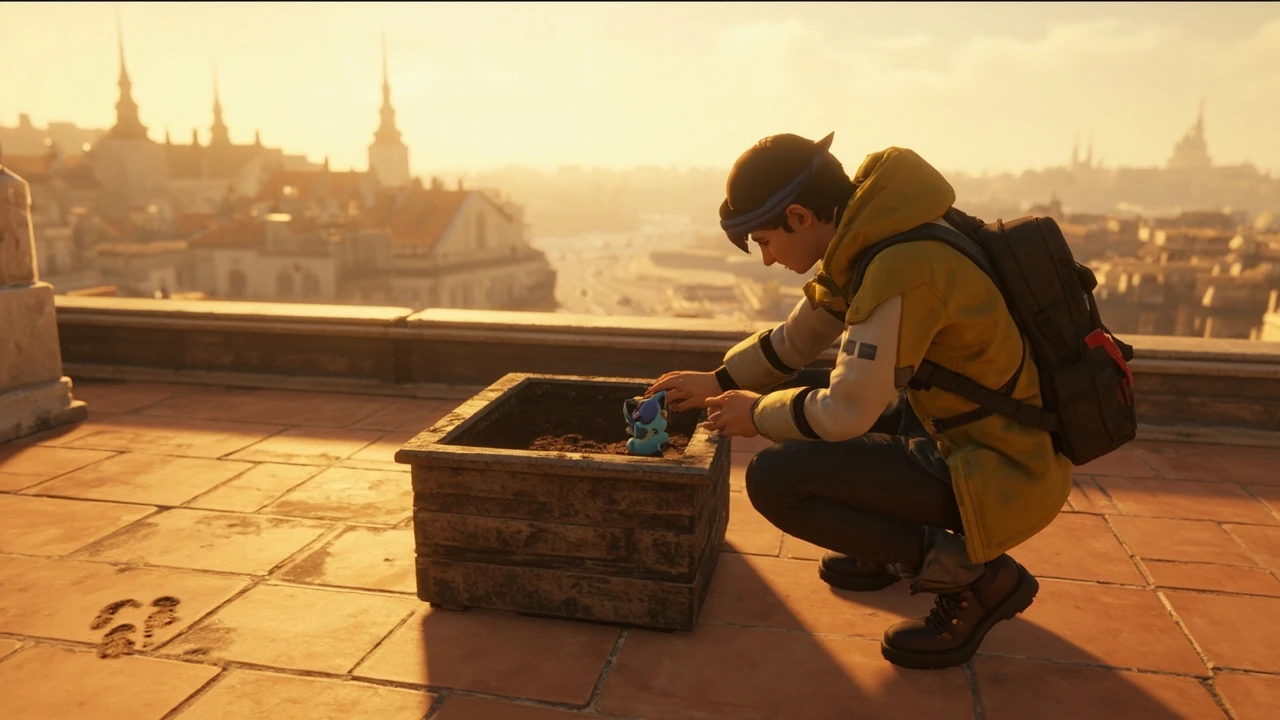
The first time you reach a new district, walk the boundary once without fighting anything. Look for planter boxes, low walls, and any decorative objects that look slightly out of place. Riolu in city settings tends to spawn in or near those props rather than in open ground. The encounter is usually a single Pokémon with a short call-for-help range, so the calmer you move, the more predictable the spawn will be.
One practical habit is to drop a marker on the map at the exact spot where you trigger the encounter, because the spawn anchor moves slightly between patches. Two players can both report the riolu location legends za in the same district and still describe two different planters, and the difference is usually a half-step in either direction along the rooftop edge.
Step-by-step: a clean Riolu run in one district
Pick one district from the table above, commit to it for the session, and run the same loop until the encounter is reliable. The numbered list below is the version of that loop that survives the most edge cases in the field. Skip a step and you will probably restart from the hotel anyway.
- Save at the nearest Pokémon Center or fast-travel anchor before you enter the district. The cost of a bad run is much higher than the time it takes to save.
- Approach the search zone from the south or the west side. Most districts seed encounters based on entry direction, and the wrong entry can push Riolu off the spawn table.
- Walk, do not run, through the first two blocks. Sprinting past planters and crates often skips the trigger that spawns the encounter.
- Listen for the secondary battle theme. Riolu’s encounter music is short, but it is different from the standard wild theme, and the audio cue tends to fire a fraction of a second before the visual trigger.
- Lead with a status move. Sleep, paralysis, or a single high-accuracy non-damaging move is enough to lock the encounter into a turn-based battle you can control.
- Throw a standard Poké Ball on the first turn after status. There is no capture bonus in this encounter beyond the standard curve, so the cheapest ball is the most cost-effective choice.
- If Riolu calls for help, focus the helper first, not Riolu. Killing the helper ends the chain and prevents the encounter from escalating.
- After the capture, save again before leaving the district. Lucario’s evolution condition is version-sensitive and easier to manage from a known save state.
- Note the time of day, the entry direction, and the patch version in a quick text file or notebook. That small record is the difference between a reproducible run and a vague guess the next time the spawn rotates.
The loop looks simple on paper, but the discipline of saving twice and walking instead of running is the difference between a clean capture and a wasted hour. If you find yourself resetting the district more than five times in a row, change district instead of grinding the same one; the spawn pool is small enough that the same dead pattern can repeat for the rest of the session.
There is also a soft rule of thumb worth keeping in mind: the longer the time between captures in a session, the more likely the spawn pool is on a cold cycle. Switching districts, fast travelling, and reloading the save are the three levers that reset a cold cycle, and most players only need one of them to break a streak.
From Riolu to Lucario: evolution without frustration
The evolution from Riolu to Lucario is a long-standing part of the franchise. Riolu evolves into Lucario only when it levels up during the day while its friendship is high. In Legends Z-A, the friendship system is the same, but the day cycle is shorter, the friendship gain is slower in city environments, and the level-up window is narrower than players coming from older titles expect. Treat the evolution as a small project of its own, not as an automatic follow-up to the capture.
The fastest path uses a combination of in-city actions that each add a small amount of friendship, plus a deliberate level-up during the in-game day. The table below maps the actions that actually move the friendship meter, ranked by how much time they cost. Numbers in the friendship column are approximate and reflect the general franchise model; the exact gain in Legends Z-A can shift with patch updates, so use the table as a planning aid, not as a guarantee.
| Action | Approximate friendship gain | Time cost | Where it works in Legends Z-A | Risk |
|---|---|---|---|---|
| Walking in the same party for ten minutes | Low | Ten minutes of real time | Any district | None |
| Battling alongside Riolu as the lead Pokémon | Medium | Several short battles | Standard encounters, side missions | Riolu can faint if overused |
| Feeding Riolu its favourite food from a café | Medium | Two to three minutes per visit | Cafés in the central districts | Spicy food lowers friendship for some species |
| Using a soothing bell or friendship-boosting held item | High per step | Item acquisition and use | Inventory item, no map dependency | Limited stock in early game |
| Healing Riolu at a Pokémon Center after a faint | Low to medium | One minute | Any Pokémon Center | Repeated fainting can lower friendship |
| Using a Friend Ball on the capture | Medium flat boost | One ball at capture | Any capture that succeeds | Friend Balls are not always in stock |
Once the friendship bar is high enough, level Riolu up during the in-game day. The cleanest method is a single low-risk battle against a wild Pokémon in the same district, then the level-up triggers at the end of the fight. Do not evolve Riolu at night; the level-up will be ignored, and you will need to level it up again. If you are not sure whether the friendship bar is high enough, open the Pokémon summary screen and check the friendship hearts, which appear as small icons next to the stats. Two visible hearts usually mean the evolution will work, three is a safe margin.
A common mistake is to assume the rare candy shortcut works. In Legends Z-A, rare candy levels up the Pokémon but does not count as a “level up during the day” event in the same way as a regular battle, so the evolution can be delayed even when the bar looks full. The reliable path is one battle, not a candy.
Why the encounter sometimes fails
Players who search for the riolu location legends za often find that the encounter simply does not fire, even when they are in the right district. The four cases below cover most of the failed reports, and the fix is usually cheaper than people expect.
The encounter is locked behind a story flag. Some districts only seed Riolu after a specific chapter or side quest. The fastest diagnostic is to check whether the rooftop or alley in question is accessible at all. If the area is fenced, guarded, or only reachable after a cutscene, the spawn is not live yet, and the fix is story progression rather than more grinding.
The time of day is wrong. The encounter is biased toward early morning and late evening, and midday tends to push the spawn off the table. Set the in-game clock to the right window by resting at the hotel and check again. The change is visible in the skybox before it is visible in the encounter rate, so a quick visual check saves a wasted run.
The district is on the wrong rotation. Legends Z-A rotates spawns by district and by day, so a district that was productive yesterday can be empty today. The fix is to switch to a different district from the table, run the same loop, and come back tomorrow. Resisting the urge to brute-force the same district is the single most efficient thing a player can do.
A status move wiped the encounter before the capture. Some non-damaging moves cause the wild Pokémon to flee on the next turn. If Riolu consistently vanishes on the second turn of the fight, swap your status move for one that does not have a flee side effect, and try again from the saved state.
Each of these failures has a specific diagnostic that takes less than a minute, and most players can resolve the issue without leaving the district. The hardest case is the story flag, because the only fix there is time, but at least the diagnosis is unambiguous.
Common player mistakes that look like bugs
Some of the “Riolu will not spawn” reports are not bugs at all. The list below groups the patterns that the community has flagged the most often, each with a quick check that takes less than a minute. If any of these match your situation, the fix is at the bottom of the bullet.
- Walking too fast into the spawn zone. Sprinting past the planters and crates skips the trigger. Fix: walk, do not run, through the first two blocks of the district.
- Saving in the wrong part of the city. Some save anchors are outside the spawn’s effective area, and the encounter will not register. Fix: save at the Pokémon Center closest to the target district, not at a fast-travel node far away.
- Battling another trainer first. Trainer battles in the spawn zone reset the encounter. Fix: clear the zone of trainers, save, and re-enter the area without engaging them.
- Using a repel by accident. A repel in the lead slot suppresses the encounter entirely. Fix: switch the repel to a different Pokémon, or remove it, and re-enter the spawn zone.
- Equipping a sound-based move that interrupts the encounter music. Some sound moves prevent the audio cue from playing, which means the visual trigger is also skipped. Fix: take the sound move out of the lead’s moveset for the duration of the run.
- Triggering a cutscene near the spawn. A nearby scripted event can lock the encounter off until the next map transition. Fix: leave the area, fast travel back, and re-enter without engaging NPCs.
If none of the items above match your situation, the most likely explanation is a patch-level change. The encounter rates in Legends Z-A have shifted across updates, and a location that worked two patches ago may need a different trigger today. Keep a small note of the date and the patch version whenever you start a Riolu run, because the date is often the only way to tell whether the change is a spawn rotation or a real bug.
How the city map changes the encounter design
From a game design perspective, replacing routes with a city is a meaningful change to encounter design. Riolu is a fighting-type baby-stage Pokémon with a small, fixed spawn pool, and the city setting forces the encounter to lean on prerequisites, time of day, and the player’s movement pattern rather than on the route layout that older players remember. The result is an encounter that is more about reading the environment and less about grinding tall grass, which is a reasonable trade for the setting but it can confuse players who expect the older formula.
For developers and designers who read this kind of analysis, three points stand out. First, the encounter is gated by a soft prerequisite chain, so the onboarding cost is real and a guide that ignores it will lose the player. Second, the city offers more visual cues than a route does, and a single planter or a low wall is enough to seed the encounter, so the design rewards careful movement. Third, the day cycle is short enough that time of day matters in practice, and the same spawn behaves differently in the morning and at night. None of this is unique to Riolu, but the encounter is a good example of how the city setting changes the design surface for rare spawns in general.
The wider Pokémon Legends series has always placed a heavier emphasis on exploration and action combat than the traditional mainline games, and the move to a fully urban setting in Legends Z-A pushes that philosophy further. The riolu location legends za question sits inside that larger shift: the encounter is a test of how well a player has learned the city, the day cycle, and the prerequisite chain, not a test of how long they can grind a single route. Once the loop becomes familiar, the same skill transfers to other rare spawns, and the city starts to feel like a coherent design rather than a backdrop.
When to give up and try tomorrow
A Riolu run that is going badly has a tell: the same two or three Pokémon keep spawning, and the target never appears. The decision to cut the session is not about effort but about cost. The list below is a simple cutoff rule. If two of the three conditions are true, save, leave the district, and try again later.
- You have reset the same spawn zone five times without a Riolu encounter.
- The in-game day has crossed noon without a status bar change.
- You have entered the spawn zone from two different directions and gotten the same result.
The reset cost is real. Each failed run burns a save state, a few minutes of in-game time, and a small amount of patience. A clean cut at the end of the second failed run is faster than grinding the same dead pattern for another hour, and tomorrow’s rotation will usually seed a fresh attempt.
One small habit that helps: at the end of a failed run, write down the time of day, the entry direction, and the patch version. That record turns a guess into a data point, and three or four data points across the same district are enough to spot the rotation pattern in most cases.
Putting it together: a one-session Riolu and Lucario plan
Players with limited play time benefit from a single, repeatable plan. The block below is the version that fits into a one- to two-hour window and is robust against the failure modes above. Adapt the district to whichever one is closest to your current story progress, and keep the rest of the plan unchanged.
- Save at the Pokémon Center nearest the chosen district.
- Walk into the spawn zone from the south or west entry, do not run.
- Clear the area of trainers, but do not battle them.
- Loop the planters and low walls until the encounter music fires or until five resets, whichever comes first.
- On the encounter, lead with a status move and a standard Poké Ball.
- If the capture fails, reload the saved state and rerun the loop with a different status move.
- On a successful capture, save again and move to the friendship phase.
- Run Riolu in the lead through three to four low-risk battles, feed it once at a café, and level it up during the in-game day.
- Confirm the evolution at the end of the level-up battle and save the file.
- Note the patch version, the district, and the time of day for the next session.
A clean run following the block above will land a Riolu and a Lucario inside a single session, and it leaves enough headroom to deal with a single failed reset without spilling into a second sitting. The plan is also robust against the most common patch-level changes, because it does not assume a specific district or a specific time of day.
Working with patch rotations
Because Legends Z-A has shifted encounter rates between patches, it helps to think of the riolu location legends za as a moving target rather than a fixed point. The same district can be the most productive spawn for two months and then quietly drop to a low-percentage slot in the next update. A simple way to stay ahead of that is to keep a small log of every successful run, with the date, the district, the entry direction, the time of day, and the patch version. Two or three weeks of data is enough to predict the next rotation, and the prediction is usually accurate within a single in-game day.
There is also a useful pattern in how the rotations tend to move. When the developers adjust a rare spawn, they usually shift it to a neighbouring district rather than across the map, so a player who has already cleared a nearby district has a good chance of being close to the new active spawn. The corollary is that a guide which only names one district is brittle; a guide which lists a small cluster of candidates is much more useful, because the cluster is what survives the next patch.
What to do with Riolu after capture
Most players capture Riolu as a step toward Lucario, and a smaller group are interested in Riolu for its own moveset. Riolu learns a few support moves that are useful in the early game, including a priority fighting-type option and a non-damaging utility move that works well in the shorter Legends Z-A day cycle. The trade-off is that Riolu’s defenses are low, and putting it in the lead against a higher-level encounter is a quick way to lose it. As a result, the practical role for a freshly caught Riolu is a slot-one support lead that builds friendship in safe fights, with a switch to the level-up battle once the bar is high enough.
After the evolution, Lucario slots into a mixed attacker role in most teams. Its steel typing gives it a defensive edge that Riolu lacks, and its access to a strong special movepool means it can be built as either a physical or a special attacker without losing tempo. Two small notes that come up in practice: Lucario’s bulk is good but not great, so it should not take repeated hits from same-level physical attackers, and its ability is sensitive to the in-game weather, which means the rotation of a few key fights can change its performance noticeably.
Frequently asked questions
Where is the most reliable riolu location legends za players mention?
Most reports point to the Vernal District rooftops and the Jaune District backstreets. Both have a clear prerequisite chain, both are reachable in the mid-game, and both are visible enough that a player can confirm the spawn visually before the encounter fires. Pick the district that matches your current story chapter and run the loop in that area only.
Do I need to complete a side quest to unlock Riolu?
In most cases, yes. The rooftop gardener request, the plaza maintenance mission, and the Jaune backstreets side quest each seed the encounter in their own district. If the area is fenced or guarded, the prerequisite is almost certainly the next side quest on your list.
What level should my team be before attempting the Riolu run?
A balanced team in the mid- to late-twenties handles the encounter without risk. Riolu itself is not the threat; the wild Pokémon in the surrounding area are. A team that can clear two or three random encounters in a row without fainting is enough.
Why does Riolu disappear after one turn of the battle?
The most common cause is a sound-based status move that triggers a flee reaction. Swap the move for a non-sound status option, reload the saved state, and try again. The flee reaction is independent of capture difficulty, so a clean opener usually solves the problem.
Can I get a Lucario in one session, or do I need a second visit?
A single session is enough if the friendship bar is already close to full. Most players reach the threshold by walking Riolu in the lead for ten minutes, fighting two or three battles alongside it, and feeding it once at a café. If the bar is not full, a second short session the next day will finish the evolution without drama.
Does the time of day really matter for the riolu location legends za encounter?
Yes. The encounter is biased toward early morning and late evening, and midday tends to suppress the spawn. Set the in-game clock to the right window by resting at the hotel, and check the skybox before you commit to the run.
What happens if I faint on the way to the spawn zone?
You respawn at the nearest Pokémon Center, the spawn zone resets, and the encounter is rolled fresh. There is no penalty beyond the time cost, but it is a useful reset when the spawn pattern is dead. Use it deliberately rather than as a side effect of a bad battle.
Is the Riolu encounter the same on every patch?
No. Legends Z-A has shifted spawn rates and prerequisites across patches, and a location that worked two patches ago may need a different trigger today. Keep a note of the patch version and the date whenever you start a run, and treat older guides as a starting point rather than a guarantee.
Should I use a repel to filter out other wild Pokémon in the district?
No. A repel in the lead slot also suppresses the Riolu encounter, which is one of the most common reasons a clean run turns into a wasted hour. If you want to skip weaker Pokémon, use a higher-level lead without a repel instead.
Can I capture Riolu in a Friend Ball for the friendship bonus?
A Friend Ball’s friendship bonus is a long-standing franchise feature, and it stacks with the actions above. If you have one in your inventory, it is a small but useful boost to the evolution phase, especially in the shorter day cycle of Legends Z-A.
Leave a Reply